
Insights
Laki Power: Harnessing Real-Time Line Data for Smarter Grid Decisions
June 22, 2026Across transmission networks, line capacity is typically defined using conservative static limits. These limits are based on fixed assumptions for ambient temperature, wind speed and solar radiation, often reflecting worst-case conditions rather than how lines operate day to day. While this maintains compliance, it can restrict available capacity at times when the network is under the most pressure.
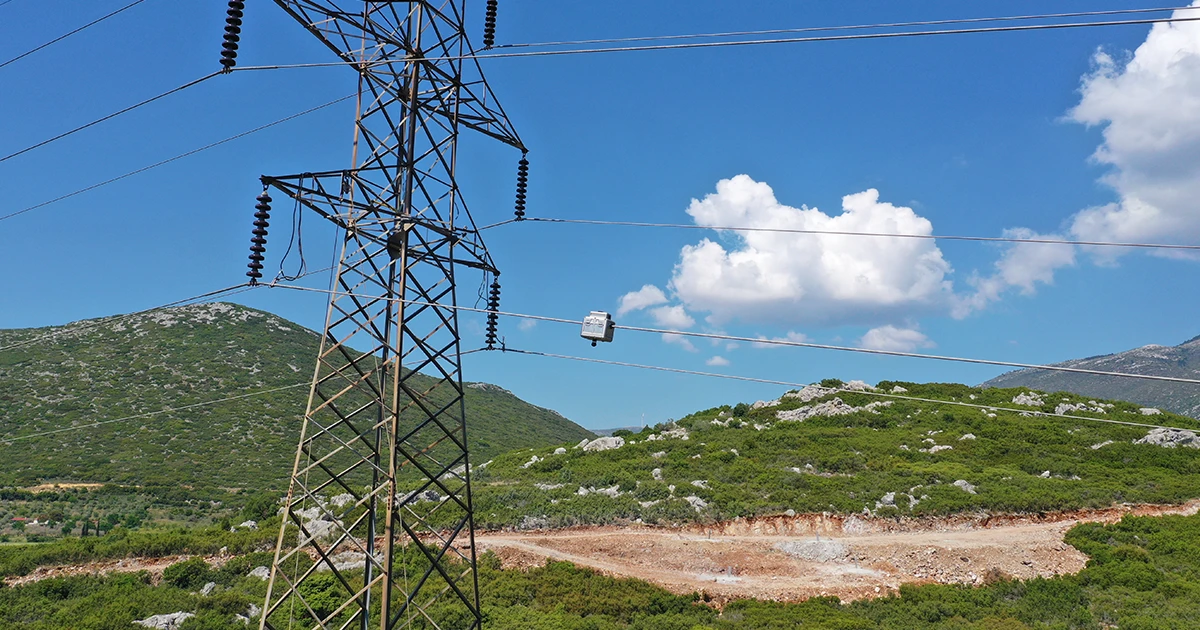
Laki Power’s Dynamic Line Rating solution enables operators to determine real-time line capacity using measured conductor and environmental data, providing a more accurate view of what the network can safely deliver.
Moving Beyond Fixed Capacity Assumptions
Static ratings are intentionally conservative, but that conservatism becomes more visible as networks operate closer to their limits. In parts of the Australian grid, particularly where renewable generation is concentrated, constraints are a routine condition.
Operators are regularly required to manage transfers within fixed limits that do not reflect actual cooling conditions on the line. This can result in curtailed generation or restricted flows, even when the conductor is operating well within safe thermal limits.
Dynamic Line Rating addresses this by replacing fixed thresholds with measured performance, giving operators access to capacity that would otherwise remain unavailable.
Measuring Line Behaviour at the Source
The governing constraint for overhead line capacity is conductor temperature, which drives sag and clearance. Maintaining safe clearance is non-negotiable, making accurate thermal visibility essential.
Laki Power’s system measures conductor temperature and sag directly at the line, supported by localised weather data such as wind and ambient conditions. These inputs are continuously processed to calculate the maximum allowable current under actual conditions.
This is particularly relevant across long Australian transmission corridors, where weather conditions can vary significantly along a single line. Static ratings cannot capture this variation, but line-level measurement can.
Supporting Real Operational Decisions
The value of Dynamic Line Rating is realised in how it supports decisions already being made in control rooms.
Real-time capacity data allows operators to adjust transfers based on current conditions, particularly during periods of high renewable output. Rather than working to a fixed constraint, operators can use dynamic limits to better match network capability with generation availability.
Short-term forecasting extends this capability. By combining live measurements with weather inputs, operators gain visibility of how capacity is likely to change over the next several hours. This supports more informed planning around load transfers, peak periods and network constraints.
Integration into Existing Workflows
For DLR to be effective, it must be accessible within existing systems. Laki Power’s solution delivers processed capacity data into SCADA and energy management platforms, allowing operators to view dynamic ratings alongside standard network parameters.
This ensures the data can be applied directly, without introducing parallel workflows or additional manual interpretation. Dynamic limits sit within the same operational framework, supporting decisions rather than complicating them.
Importantly, all dynamic ratings are applied within established engineering constraints, maintaining compliance with protection settings and safety requirements.
Cost, Value and Network Impact
For Australian transmission operators, the value of Dynamic Line Rating is tied to how effectively it unlocks capacity from existing infrastructure.
In constrained parts of the network, increasing transfer capability typically requires significant capital investment, such as new lines or reconductoring. These projects involve long lead times, regulatory processes and high upfront costs.
By contrast, DLR improves utilisation of existing assets. Where environmental conditions allow, even modest increases in available capacity can reduce congestion, support higher export from renewable generation and ease operational pressure.
The return is most evident where constraints are already influencing dispatch outcomes. In these environments, real-time line data becomes a practical tool for improving throughput without altering the physical network.
Understanding Asset Performance Over Time
Operating closer to available capacity requires a clear understanding of how assets respond under load. Dynamic Line Rating provides continuous visibility of conductor temperature and mechanical behaviour, rather than relying solely on conservative thresholds.
Over time, this data supports a more informed approach to asset management. Operators can identify patterns, assess how lines perform under varying conditions and make targeted decisions around maintenance and operation. This reduces reliance on broad assumptions and supports more consistent long-term performance.
A More Accurate View of Network Capacity
Dynamic Line Rating does not replace established limits, but it improves how they are applied in practice. By aligning capacity with real conditions, operators gain a more reliable understanding of what their network can deliver at any given time.
For Australian utilities managing long distances and variable climates, this approach provides a practical way to increase network efficiency without compromising safety. Laki Power’s solution supports this by delivering real-time, line-level data that can be directly applied to operational decisions.
To discuss a Laki Power solution for your operations, reach out to our energy team.