
Insights
Managing Arc Flash Risk in Renewable Energy Systems with Current Limiting Protection
November 19, 2025As the energy sector accelerates its shift toward renewables, the supporting electrical infrastructure is undergoing rapid transformation. Solar and wind systems are now central to generation strategies, but their integration introduces new operational risks—particularly in the area of arc flash safety. These risks are often overlooked, yet they carry serious implications for worker safety, equipment reliability and operational continuity.
Understanding and mitigating arc flash hazards in renewable systems requires a different approach to protection; one that accounts for the unique electrical behaviour of these technologies. The Current Limiting Protector (CLiP), developed by G&W Electric, offers a proven solution for reducing fault energy and improving system resilience in these environments.
What Is an Arc Flash?
An arc flash is a high-energy electrical discharge that occurs when a fault causes current to travel through the air between conductors or from a conductor to ground. This results in the rapid formation of a plasma arc, which can reach temperatures exceeding 19,000°C. The energy released during an arc flash can cause severe burns, pressure waves, molten metal and intense light—posing a serious threat to anyone nearby.
The severity of an arc flash depends on two key factors: the magnitude of the fault current and the time it takes to interrupt the fault. Higher fault currents and longer clearing times result in greater energy release, increasing the risk of injury and equipment damage.
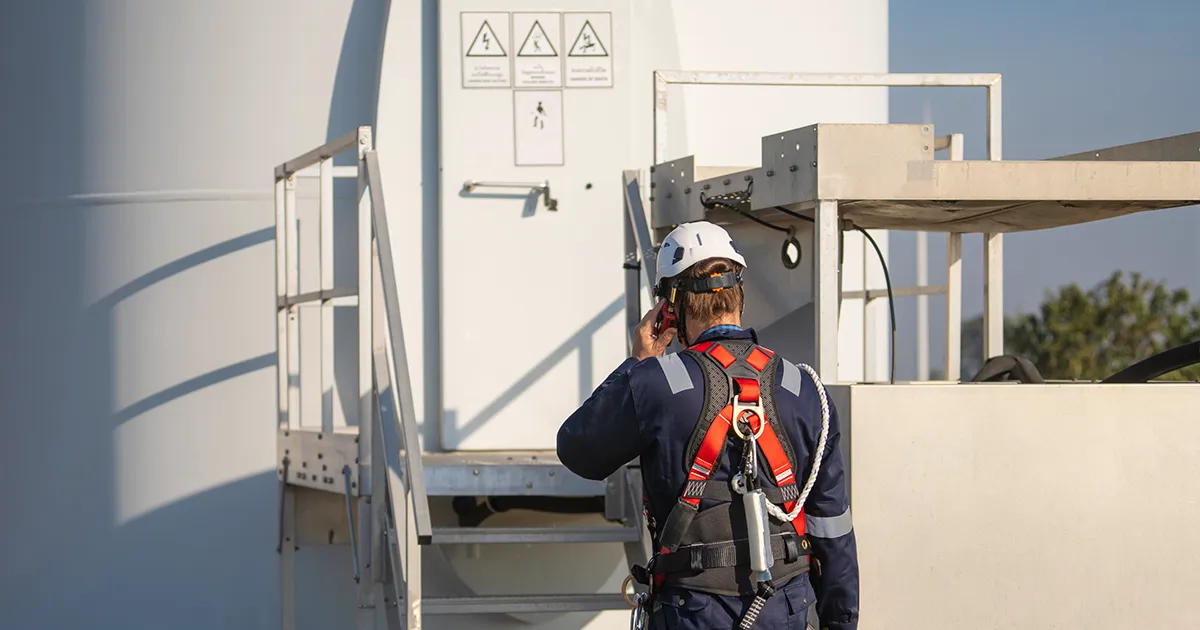
Why Renewable Systems Present a Greater Challenge
Renewable energy systems introduce electrical behaviours that differ from those found in conventional power networks. These differences can make arc flash risk more difficult to assess and manage.
One of the key challenges is variability. Solar and wind generation is inherently intermittent, with output that changes based on weather conditions. This leads to fluctuating load profiles and fault current levels, which can complicate protection settings and coordination.
Many renewable sites are also located in remote areas, where access for maintenance or emergency response is limited. In the event of an arc flash, delayed intervention can increase the severity of damage and extend downtime.
The electrical characteristics of renewable systems add further complexity. Solar PV systems operate on direct current (DC), which does not naturally pass through zero and can sustain arcs for longer than alternating current (AC). Wind turbines often use power conversion systems that produce variable frequency AC, which can affect how faults are detected and cleared. Inverters, converters and other power electronics also introduce fault paths that behave differently from those in traditional systems, making it harder to model and mitigate arc flash risk using standard approaches.
These factors combined mean that arc flash protection in renewable environments requires more responsive and adaptable solutions.
The CLiP: A High-Speed, Current-Limiting Solution
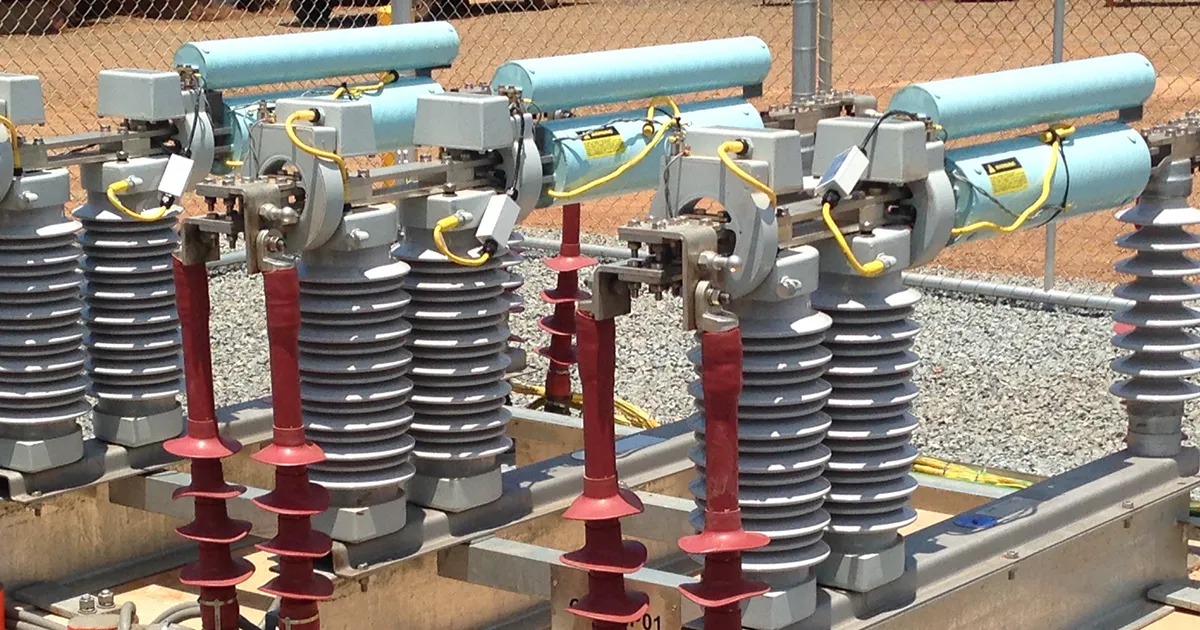
To address these challenges, G&W Electric developed the Current Limiting Protector (CLiP)—a fast-acting device designed to limit fault current before it reaches damaging levels. Unlike conventional circuit breakers or fuses, which may take milliseconds to operate, the CLiP interrupts fault current in microseconds. This rapid response significantly reduces the energy released during a fault, lowering the risk of arc flash and minimising equipment damage.
The CLiP is particularly effective in systems where the available fault current exceeds the thermal or mechanical ratings of downstream equipment. By limiting the peak current and reducing let-through energy, it helps protect transformers, switchgear and conductors from destructive overcurrent conditions.
Its sealed, compact design supports both indoor and outdoor installation, and it is available in configurations suitable for medium voltage systems up to 38 kV, with continuous current ratings up to 5000 A and interrupting capabilities up to 200 kA.
CLiP-LV: Precision Protection for Low Voltage Systems
For low voltage applications, the CLiP-LV offers electronically sensed and triggered protection. It includes a built-in current transformer that provides real-time current data to internal electronics. When the current exceeds a pre-set threshold, the device initiates interruption almost instantly.
The CLiP-LV is field-adjustable, allowing operators to set trigger levels based on system requirements. It also includes remote enable/disable functionality and trip indication, making it suitable for integration with SCADA systems. Its outdoor-rated design eliminates the need for additional enclosures, and its copper busbar construction helps reduce system losses.
This makes the CLiP-LV particularly useful for protecting tertiary windings, capacitor banks and harmonic filters—components commonly found in renewable installations.
A Smarter Approach to Arc Flash Mitigation
As renewable energy systems continue to grow in scale and complexity, the need for advanced protection strategies becomes more urgent. Arc flash risk cannot be eliminated entirely, but it can be significantly reduced through the use of fast-acting, current-limiting technologies like the CLiP.
At CSE Uniserve, we work with operators to implement protection solutions that are technically robust, adaptable and aligned with the realities of modern energy systems. The CLiP represents a critical tool in this effort—supporting safer, more resilient infrastructure as the energy transition accelerates.
If you’re working with renewable systems and want to reduce arc flash risk without overhauling your infrastructure, get in touch with us to discuss how the CLiP can help protect your people and your assets.