
Insights
Managing harmonics for uptime and efficiency in Australian data centres
May 4, 2026Australian data centres are seeing higher, more variable demand as AI and cloud usage grow. In this environment, harmonics quietly waste energy, raise temperatures and limit available capacity.
Managing them early on with continuous visibility and targeted correction helps operators keep power steady, protect uptime and reduce avoidable costs.
The operational challenge
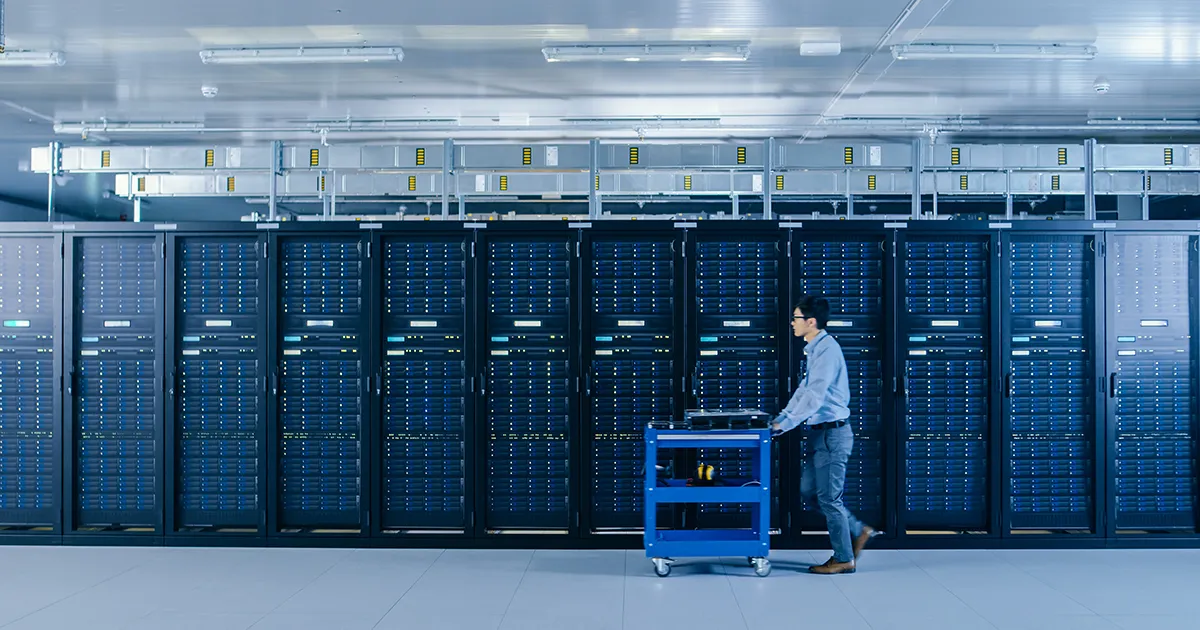
Nonlinear loads in IT, UPS and cooling draw current in pulses rather than smoothly. The result is extra heat in cables, transformers and switchgear. Data centres are full of these nonlinear loads. Server power supplies use switch mode rectification. Uninterruptible power supplies, variable speed drives on chilled water pumps and fans, and LED lighting all contribute harmonic currents. As rack densities increase and load profiles become more dynamic, the harmonic spectrum shifts over time, which makes static corrective measures less effective.
Treating harmonics converts avoidable losses into usable capacity, helps equipment run within intended limits and eases cooling for the same kW. That translates into fewer nuisance events and a more predictable electrical environment without major redesign.
A two‑part approach: measure precisely, mitigate in real time
Power Quality Analysers
Continuous power quality analysers provide high resolution visibility of waveforms and harmonics, so teams see distortion as it develops through changeover, maintenance and peak compute cycles. Unlike periodic spot checks, continuous recording reveals patterns and sources, making it easier to target the electrical nodes that deliver the largest improvement.
In practice this delivers:
- Trend visibility across daily and seasonal cycles, not snapshots
- Faster root cause analysis with clear evidence of what changed and why
- Measurable proof that interventions reduce losses, stabilise voltage and lower nuisance alarms
- Decision support for harmonics, voltage disturbances and compliance without guesswork
Active Harmonic Filters
For data centres with variable or unpredictable profiles, active harmonic filters are the most versatile mitigation tool. These systems sense the harmonic content in real time and inject equal and opposite currents to cancel unwanted orders. They perform across a wide spectrum, adapt to load changes and can simultaneously support power factor correction without introducing the resonance risks associated with fixed capacitor banks.
In practice this delivers:
- Real‑time harmonic cancellation across changing loads
- Lower thermal stress on distribution equipment and improved asset life
- Reduced losses and cooling demand, translating into measurable energy savings
- Easier compliance with widely referenced power quality criteria
- A stable platform for UPS and VSD operation
CSE Uniserve engineers configure filters to target the orders that matter most for your site, with attention to placement and coordination so mitigation is effective without over‑compensation.
Technology In Practice
A site with harmonics under control shows low, stable distortion at the points that feed critical IT, fewer nuisance events under changeover or step loads, and a distribution network that runs cooler for the same compute output. Teams have continuous visibility of trends, can forecast where issues are likely to arise, and can demonstrate the impact of each improvement.
Over time this translates into better capacity utilisation, lower energy overheads and longer asset life, while supporting a cleaner compliance record as reporting expectations evolve.
Partnering with CSE Uniserve
By reducing losses and improving efficiency, our power quality approach helps operators stay compliant, cut emissions and secure long‑term reliability, while reducing operating costs and delivering long‑term value over the asset’s life.
If you want to track distortion accurately and reduce it in a way that benefits both uptime and energy costs, talk to our specialist team today about a tailored solution.